The skyline of Washington, DC is undergoing a transformation that feels both historic and deeply personal. For decades, our central business districts were defined by the rhythmic hum of the 9-to-5: the morning surge at the Metro, the midday rush for a sandwich on K Street, and the quiet descent of evening over blocks of limestone and glass. But in 2026, those blocks are beginning to tell a new story. The "Ghost Office" era a period where sprawling floor plates sat silent while teams collaborated from kitchen tables and home offices has acted as a catalyst for a massive urban pivot. We are witnessing the rebirth of the office block as a residential hub, turning once-stagnant commercial corridors into vibrant, 24-hour neighborhoods.
This shift isn't just about real estate; it's about the very soul of our city. When a federal agency or a legacy firm decides that their 200,000-square-foot headquarters no longer fits their hybrid reality, the ripple effect is immense. A government office relocation in 2026 is often the first domino to fall in a neighborhood’s transformation. As agencies "right-size" into leaner, modern Class A spaces, they leave behind older "Class B" buildings that are perfectly positioned for a second life. These structures, once filled with cubicles and filing cabinets, are being gutted and reimagined as sun-drenched apartments, creative lofts, and community-centric living spaces.
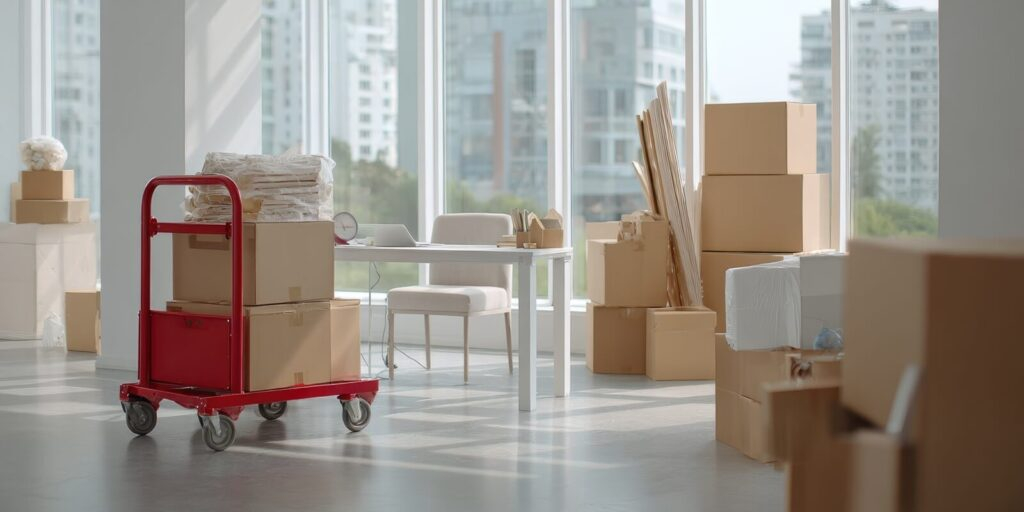
The logistical heavy lifting behind this evolution is a feat of modern engineering and coordination. Moving a mission-critical department out of an aging facility requires a specialized set of hands. In the District, the role of government movers has evolved into something far more complex than simple hauling. These teams are the navigators of the "Great Transition," managing the secure decommissioning of sensitive infrastructure and the precise relocation of federal assets to make room for the construction crews. They are the silent partners in the city’s evolution, ensuring that while the buildings change their purpose, the work of the nation remains uninterrupted.
The Adaptive Reuse Revolution: Cubicles to Kitchens
Turning an office building into a home is a bit like a high-stakes puzzle. It’s not as simple as putting up a few walls and calling it a bedroom. The deep floor plates of 1970s and 80s office blocks often mean the center of the building is far from any windows a challenge that has led to some of the most creative architecture in DC’s history.
- Light Wells and Atriums: Architects are "carving out" the centers of buildings to create stunning interior courtyards and light wells, ensuring that even the units in the heart of the structure feel airy and connected to the outside world.
- The Plumbing Pivot: Offices were built with central "core" bathrooms. Converting these to residential use means running thousands of feet of new plumbing to support individual kitchens and baths for every unit a massive undertaking that modern 2026 conversion standards have streamlined.
- The "Amenity" Boom: Because office buildings often have underutilized basements or expansive mechanical floors, developers are filling them with "lifestyle" features: indoor dog parks, bouldering walls, and sound-proof recording studios for the District’s growing creative class.
Why Now? The 2026 Policy Push
Washington, DC didn't become a national leader in office-to-residential conversions by accident. In 2026, the city’s "Housing in Downtown" (HID) program has reached full stride. By offering 20-year tax abatements and property tax freezes, the District has unlocked over $1 billion in private investment.
The goal is clear: to add 15,000 new residents to the downtown core by 2028. This isn't just about housing; it’s about economic survival. New residents bring a "rooftop economy" they need grocery stores, pharmacies, and bars that stay open past 6:00 PM. They turn a "9-to-5" district into a "24/7" community, providing a stable tax base that isn't dependent on the fluctuating daily commute.
The Human Impact: A City for Everyone
Perhaps the most humanized part of this urban evolution is the focus on inclusivity. Major 2026 projects, like the massive conversion of The Geneva on Connecticut Avenue, are setting a new standard by including significant amounts of permanently affordable housing.
We are moving away from the "superstar city" model where only the wealthiest could afford to live near their work. Today’s conversions are creating a mixed-income tapestry.
- The Young Professional: Living in a sleek, high-tech loft near Dupont Circle.
- The Federal Employee: Utilizing "Work-from-Home" pods in their building’s lobby before a quick commute to their right-sized headquarters.
- The Artist: Finding space in former mechanical rooms repurposed as studios.
Conclusion: Designing the Next Century of DC
The evolution from office blocks to residential hubs is more than a solution to high vacancy rates; it is a reimagining of what a city can be. It is a transition from a place where we only "go to work" to a place where we truly "live." Washington, DC is proving that urban resilience lies in the ability to pivot to take the limestone monoliths of the past and fill them with the energy, families, and dreams of the future.
Navigating this transition whether you are a developer looking to convert an asset or an agency planning a strategic move requires a partner who understands the unique pulse and the rigorous demands of the District.
At Moving Masters, we have spent over four decades as the navigators of the city’s changes. We don't just move boxes; we facilitate the evolution of the District. With a 0.01% claim ratio and GSA Schedule 48 certification, we provide the technical mastery and humanized care required for even the most complex relocations. Visit our home page today to see how we can help you move your mission and our city forward.