The global retail landscape has experienced a monumental shift toward digital platforms, making the logistics sector the primary engine of modern commerce. As consumers increasingly prefer the convenience of doorstep delivery, the infrastructure supporting these transactions must evolve with unprecedented speed. Understanding the factors fueling E-Commerce Logistics Market Growth is essential for businesses aiming to stay relevant in an era defined by rapid fulfillment and global connectivity.
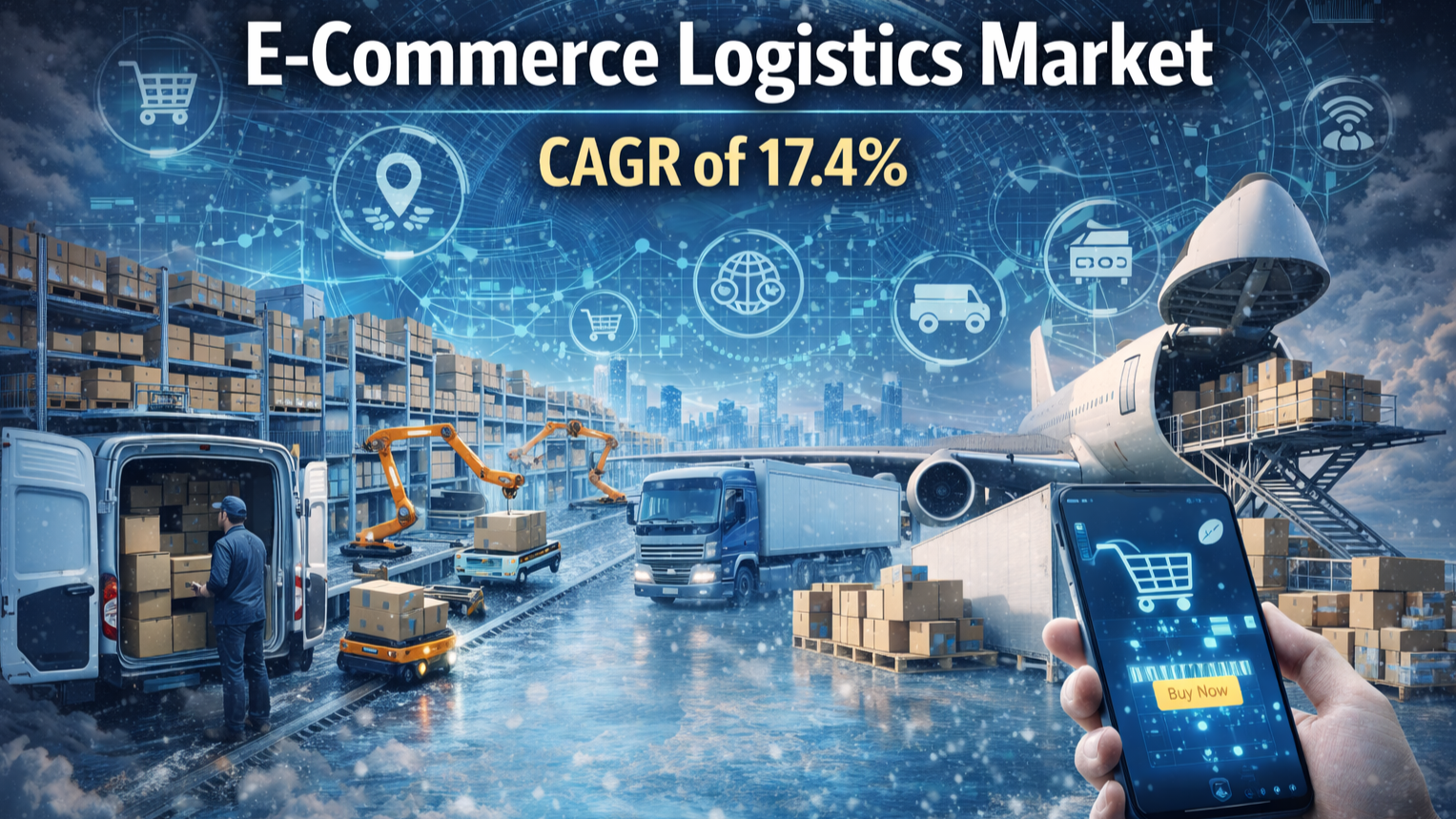
The scale of this expansion is reflected in recent financial projections. The E-Commerce Logistics Market is expected to register a CAGR of 17.4% from 2025 to 2031. This high growth rate is a direct result of increased internet accessibility and a fundamental change in consumer behavior across both developed and emerging economies.
Catalysts for Rapid Expansion
Several key drivers are pushing the boundaries of this industry. First, the rise of social commerce and mobile shopping has created a continuous stream of small-parcel orders that require sophisticated sorting and distribution networks. This high frequency of transactions necessitates a move away from traditional bulk shipping toward agile, high-velocity logistics models.
Another major contributor to E-Commerce Logistics Market Growth is the expansion of cross-border e-commerce. Improvements in international payment gateways and more transparent customs processes have allowed small businesses to sell to a global audience. Consequently, logistics providers are expanding their international air and sea freight capabilities to bridge the gap between continents, ensuring that a product ordered in one hemisphere can reach another in a matter of days.
Download PDF Brochure- https://www.theinsightpartners.com/sample/TIPTE100000892
Technological Advancements and Infrastructure
Investment in technology is a cornerstone of this upward trajectory. Logistics companies are integrating Artificial Intelligence to predict demand patterns and optimize delivery routes in real time. The adoption of warehouse robotics has also improved the speed of order picking and packing, reducing the time from click to delivery. These efficiencies lower operational costs and allow providers to handle the massive volumes expected through 2031.
Key Industry Players
The competitive landscape is dominated by organizations that have successfully blended traditional shipping expertise with cutting-edge digital tools. Key players leading the market include:
-
Amazon
-
DHL International GmbH
-
FedEx Corporation
-
United Parcel Service, Inc.
-
Ceva Holdings LLC
-
Aramex International
-
S.F. Express
-
Clipper Logistics Plc.
-
Gati Limited
-
Kenco Group, Inc.
Future Outlook
The future of the industry remains incredibly bright as it moves toward a more sustainable and autonomous model. We expect to see a surge in the use of electric delivery fleets and green warehousing to meet environmental regulations and consumer expectations. As the market pursues its 17.4% CAGR, the focus will shift toward perfecting the last-mile experience through smart lockers and autonomous delivery systems. This evolution will ensure that the logistics sector remains the resilient backbone of the global digital economy for the foreseeable future.
Related Reports–
About Us
The Insight Partners is a leading global market research and consulting firm specializing in delivering actionable insights across various industries. Our research reports combine extensive primary and secondary research to provide accurate market intelligence, helping businesses make informed strategic decisions. The company provides detailed analysis on emerging technologies, market trends, competitive landscapes, and growth opportunities across sectors including technology, healthcare, manufacturing, and energy.
Contact Us
The Insight Partners
Phone: +1-646-491-9876
Email: [email protected]
Website: https://www.theinsightpartners.com