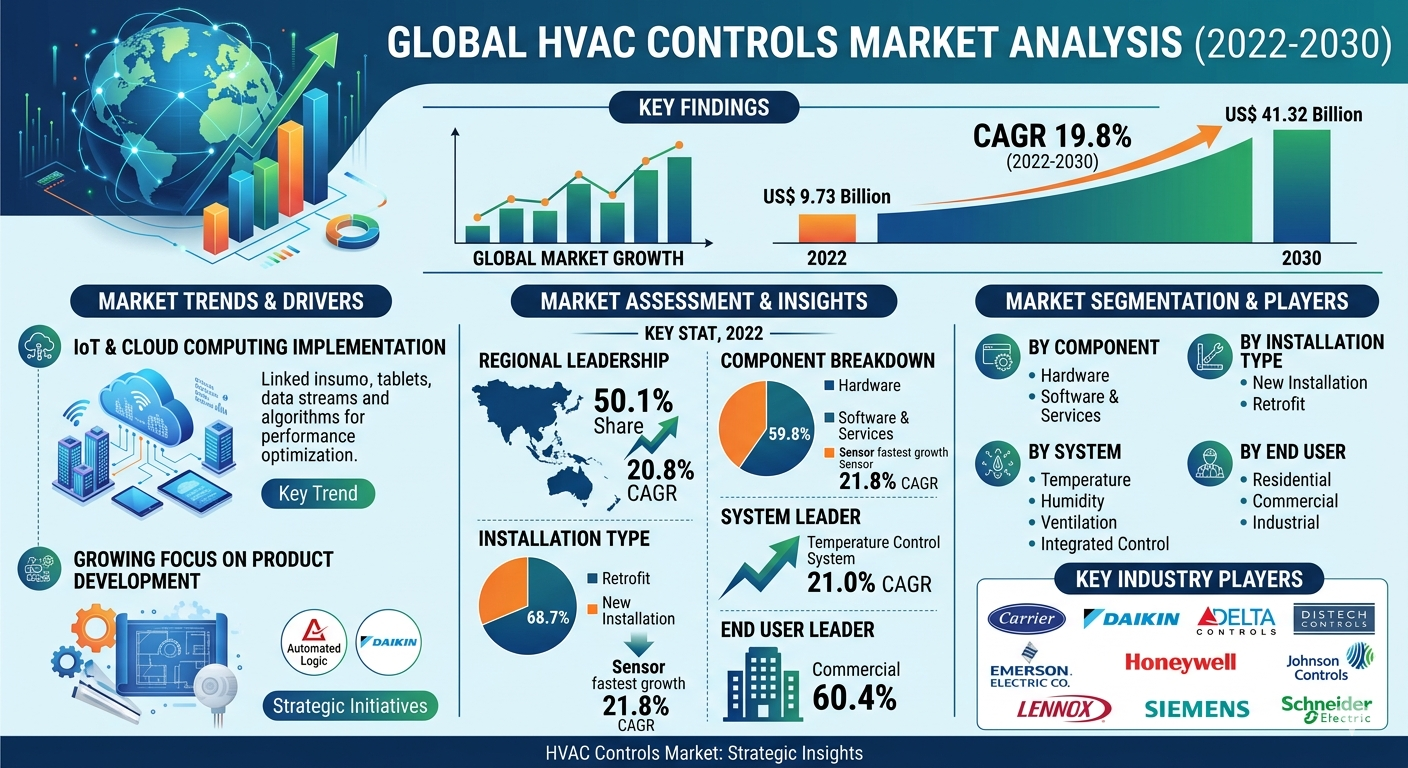
The building automation landscape in North America is evolving rapidly, driven by rising energy costs, strict environmental regulations, and increasing adoption of smart infrastructure solutions. Across commercial, residential, and industrial sectors, organizations are prioritizing energy efficiency, occupant comfort, and operational optimization. Heating, ventilation, and air conditioning (HVAC) systems are among the largest energy consumers in buildings, making advanced control technologies essential for reducing energy usage and improving system performance. As digital transformation accelerates, HVAC controls are becoming a core component of intelligent building ecosystems across the region.
The HVAC Controls Market Size in North America is witnessing strong expansion, supported by rapid adoption of smart building technologies, IoT-enabled systems, and energy-efficient infrastructure upgrades. The HVAC Controls Market is growing as governments, enterprises, and facility operators increasingly focus on reducing carbon emissions, optimizing energy consumption, and modernizing aging building infrastructure. Rising demand for automation, remote monitoring, and predictive maintenance solutions is further strengthening market growth across the United States and Canada.
For detailed insights, download the sample report:
https://www.theinsightpartners.com/sample/TIPEL00002153
Strong Focus on Energy Efficiency Regulations
One of the most important growth drivers in North America is the implementation of strict energy efficiency standards and environmental regulations. Governments and regulatory bodies are actively promoting energy conservation initiatives and green building certifications.
HVAC control systems help buildings comply with these standards by enabling real-time energy monitoring, automated adjustments, and optimized system performance. This regulatory push is significantly accelerating the adoption of advanced HVAC control technologies across commercial and institutional buildings.
Expansion of Smart Buildings and Building Automation
The rapid growth of smart buildings is a key factor driving HVAC controls demand in North America. Modern buildings are increasingly integrating building automation systems (BAS) that connect HVAC, lighting, and security systems into a unified platform.
This integration enables centralized monitoring and intelligent control of energy usage, improving both efficiency and occupant comfort. The adoption of smart thermostats, occupancy sensors, and cloud-based HVAC management systems is expanding rapidly, particularly in commercial offices, healthcare facilities, and high-rise residential buildings.
Rising Adoption of IoT and AI-Based HVAC Systems
Technological advancement is transforming HVAC systems into intelligent, data-driven solutions. IoT-enabled sensors are widely used across North America to monitor temperature, humidity, air quality, and occupancy in real time.
Artificial intelligence (AI) and machine learning algorithms further enhance system efficiency by predicting usage patterns and automatically adjusting settings. Cloud-based platforms allow facility managers to remotely monitor and control multiple buildings, improving operational efficiency and reducing maintenance costs.
Growth in Commercial Real Estate and Infrastructure Development
The expansion of commercial real estate in North America is significantly contributing to HVAC controls adoption. Office buildings, shopping complexes, hospitals, educational institutions, and data centers require precise environmental control systems to ensure efficiency and comfort.
Data centers, in particular, are a major growth segment due to high cooling requirements driven by increasing digitalization and cloud computing demand. HVAC control systems help optimize cooling efficiency and reduce energy consumption in these high-load environments.
Increasing Retrofit and Modernization Activities
A large portion of building infrastructure in North America consists of aging HVAC systems that require modernization. Retrofitting existing buildings with advanced HVAC controls is emerging as a key growth opportunity.
These upgrades allow property owners to improve energy efficiency, reduce operational costs, and extend system lifespan without complete infrastructure replacement. Retrofit projects are particularly strong in commercial and institutional sectors.
Rising Demand in Residential Smart Homes
The residential sector is experiencing growing adoption of smart HVAC controls, driven by increasing consumer awareness of energy efficiency and home automation technologies.
Smart thermostats and mobile-controlled HVAC systems are becoming increasingly popular, allowing homeowners to remotely manage indoor temperatures and reduce energy costs. The rising adoption of smart home ecosystems is further boosting residential demand across North America.
Sustainability and Green Building Initiatives
Sustainability is a major focus across North America, with strong emphasis on reducing carbon emissions and achieving energy-efficient building standards. Programs such as LEED certification and energy benchmarking are encouraging the use of advanced HVAC control systems.
These systems help optimize energy usage and support environmentally friendly building operations. As organizations commit to net-zero targets, demand for intelligent HVAC controls is expected to grow further.
Competitive Landscape and Key Players
The North American HVAC controls industry is highly competitive, with major global and regional players focusing on innovation, digital integration, and strategic partnerships. Key companies include:
- Johnson Controls International plc
- Honeywell International Inc.
- Carrier Global Corporation
- Trane Technologies plc
- Emerson Electric Co.
- Schneider Electric SE
- Siemens AG
- Lennox International Inc.
- Distech Controls Inc.
- Delta Controls Inc.
These companies are investing heavily in IoT-enabled platforms, AI-driven analytics, and cloud-based building management systems to strengthen their presence in the region.
Future Outlook
The North America HVAC controls industry is expected to witness strong and sustained growth through 2031, driven by increasing adoption of smart buildings, stricter energy regulations, and rapid technological advancements. The integration of IoT, AI, and cloud computing will continue to transform HVAC systems into intelligent, self-optimizing solutions.
As the region continues its transition toward energy-efficient and sustainable infrastructure, HVAC controls will remain a critical enabler of smart building ecosystems, creating long-term growth opportunities across all end-use sectors.
About Us
The Insight Partners is a leading market research and consulting firm providing actionable insights across multiple industries. Our reports deliver in-depth analysis, accurate data, and strategic recommendations to help organizations make informed decisions and achieve sustainable growth.
Contact Us
For more information about this report, please contact us:
The Insight Partners
Email: [email protected]
Phone: +1-646-491-9876
Website: https://www.theinsightpartners.com
Related Reports -
Embedded Computing Market Share, Trends, and Growth Opportunity
Digital Twin Technology MarketShare, Trends, and Growth Opportunity