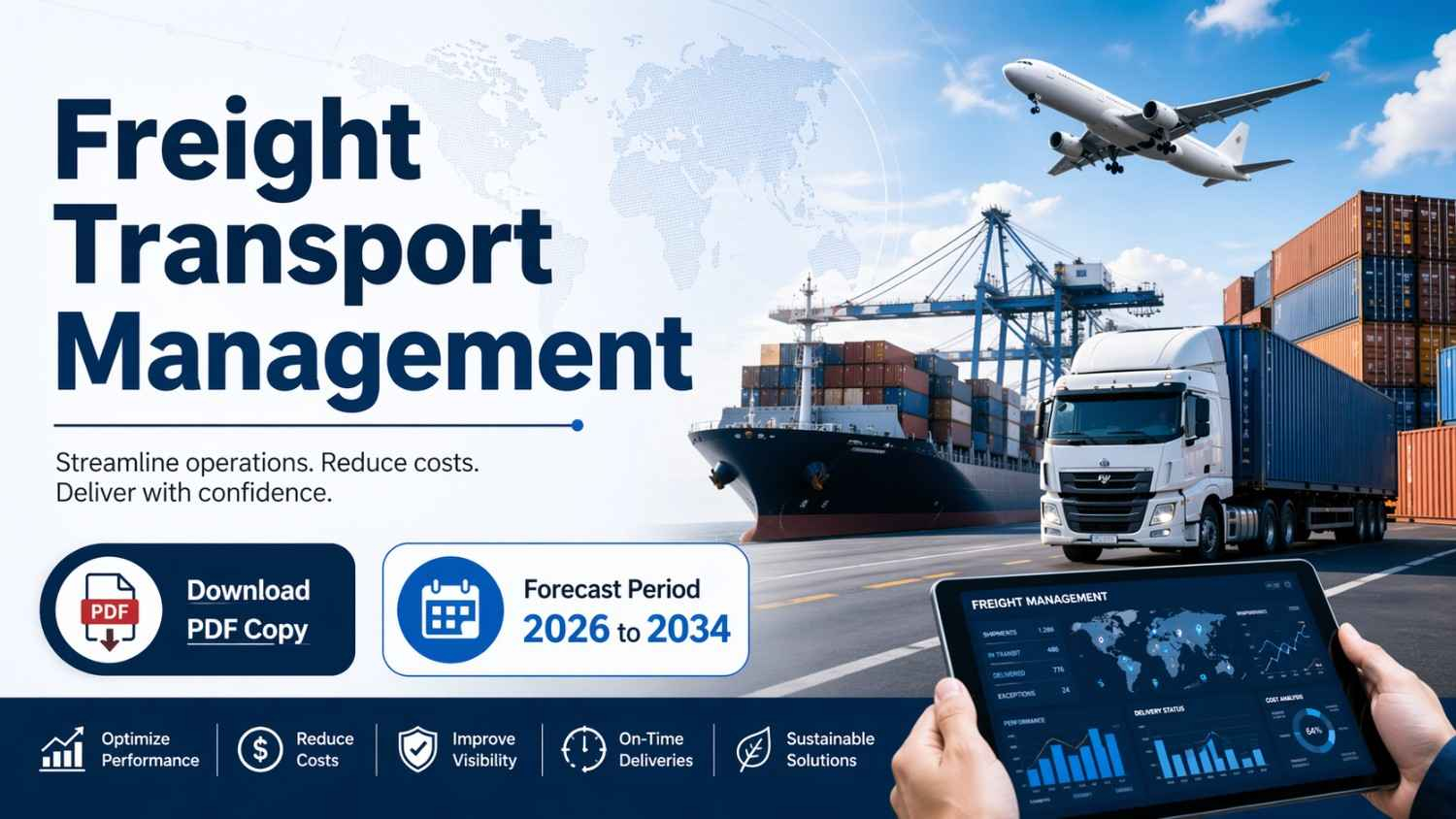
The global logistics landscape is undergoing a massive paradigm shift as the Freight Transport Management Market moves toward a projected valuation of significant proportions by 2034. As supply chains become increasingly complex and globalized, the demand for sophisticated systems that can oversee the movement of goods across road, rail, air, and ocean has never been higher. Freight transport management systems (FTMS) are no longer just administrative tools; they have evolved into the central nervous system of global trade, enabling companies to optimize routes, reduce carbon footprints, and maintain real time visibility over high value assets.
Freight Transport Management market size is expected to reach US$ 71.19 Billion by 2034 from US$ 33.25 Billion in 2025. The market is anticipated to register a CAGR of 8.83% during the forecast period 2026–2034.
Recent Developments and Market News
The Freight Transport Management Market News is currently buzzing with strategic activities ranging from high stakes acquisitions to groundbreaking technological launches. In recent months, the industry has seen a surge in partnerships between traditional logistics providers and tech startups. These collaborations aim to bridge the gap between physical infrastructure and digital intelligence.
One of the most notable trends is the rapid adoption of Artificial Intelligence (AI) and Machine Learning (ML) for predictive analytics. Major players are now deploying tools that can predict potential port congestion or weather disruptions days in advance, allowing for proactive rerouting. Furthermore, the push for sustainability has led to the development of green logistics modules within transport management platforms. These modules help shippers calculate and report CO2 emissions, a requirement that is becoming mandatory in many international jurisdictions.
Cloud native solutions are also dominating recent news. The industry is moving away from on premise installations in favor of SaaS (Software as a Service) models. This shift allows small and medium enterprises to access the same high level logistics tools as multinational corporations, democratizing the market and driving overall growth. Recent investment rounds in the sector suggest a strong confidence in blockchain technology to secure documentation and streamline the "track and trace" capabilities of global freight.
Market Dynamics and Future Outlook
Looking toward 2034, the integration of the Internet of Things (IoT) will be the primary driver of market expansion. Sensors attached to containers and trailers provide a continuous stream of data regarding temperature, humidity, and location. This is particularly vital for the pharmaceutical and food industries, where maintaining the cold chain is critical. As 5G networks become more ubiquitous, the latency in data transmission will vanish, providing a truly "live" view of global inventory in motion.
Another significant factor shaping the future is the rise of autonomous trucking and drone deliveries for last mile logistics. While these technologies are still in various stages of testing, by 2034, they are expected to be integrated into standard freight management workflows. This will require management systems to be even more robust, handling not just human drivers but also robotic fleets and automated warehouses.
The regulatory environment will also play a pivotal role. Governments worldwide are investing in "Smart City" initiatives and digital infrastructure. This public sector support is expected to streamline customs clearances and reduce the bottlenecks currently seen at international borders. The move toward a paperless trade environment, supported by electronic Bills of Lading (eBL), will significantly reduce the administrative burden on freight forwarders and carriers alike.
Download Sample PDF Report@ https://www.theinsightpartners.com/sample/TIPRE00007175
Key Players in the Freight Transport Management Market
The competitive landscape is defined by a mix of established logistics giants and specialized software providers. These companies are investing heavily in R&D to maintain their market share and provide comprehensive end to end solutions. Top players include:
- Oracle Corporation
- SAP SE
- Manhattan Associates
- C.H. Robinson Worldwide, Inc.
- Descartes Systems Group
- Blue Yonder (formerly JDA Software)
- Accenture PLC
- Trimble Inc.
- Kuehne + Nagel International AG
- Werner Enterprises
Frequently Asked Questions
What are the primary benefits of implementing a Freight Transport Management System?
The primary benefits include reduced freight spend through optimized carrier selection, enhanced visibility of the supply chain, automated documentation, and improved customer service through accurate delivery estimates. It also helps in reducing manual errors and improving overall operational efficiency.
How is sustainability impacting the Freight Transport Management Market?
Sustainability is becoming a core component of logistics strategy. Modern management systems now include features for carbon footprint tracking and route optimization to minimize fuel consumption. This helps companies meet environmental regulations and fulfill corporate social responsibility goals.
What role does AI play in the future of freight transport?
AI is used for predictive modeling, demand forecasting, and automated decision making. It allows the system to learn from historical data to suggest the best shipping routes, predict delays, and even automate the negotiation of freight rates with carriers.
About The Insight Partners
The Insight Partners provides comprehensive syndicated and tailored market research services in the healthcare, technology, and industrial domains. Renowned for delivering strategic intelligence and practical insights, the firm empowers businesses to remain competitive in ever-evolving global markets.
Contact Information
- Email: [email protected]
- Website: theinsightpartners.com
- Phone: +1-646-491-9876
Also Available in: Korean|German|Japanese|French|Chinese|Italian|Spanish